 Guide
GuideEuro vs. Ameritrash: What's the Difference?
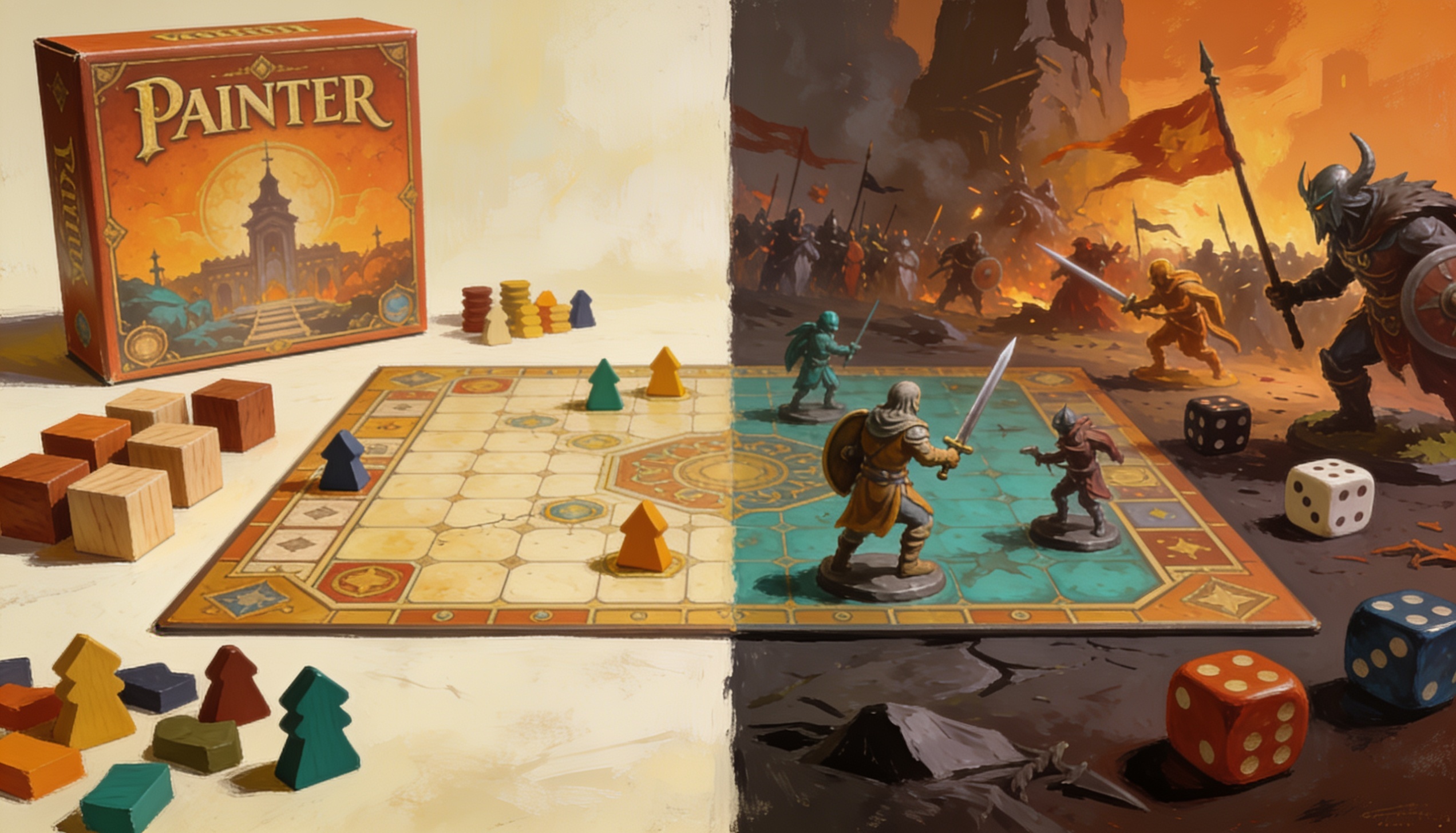
"Euro" and "Ameritrash" are the two big design philosophies in modern board gaming, and the difference comes down to what the designer cares about most. Euro games put clean mechanics and tight decisions first, with low luck and almost no direct conflict. Ameritrash games put theme, story, and drama first, with dice, cards, big swings, and players actively wrecking each other.
That's the short version. The names are tribal shorthand the hobby invented to argue about taste, and plenty of great games sit right in the middle. But once you know which way a game leans, you can predict how it'll feel at the table before you ever punch out the cardboard. Here's how to tell them apart, and what to play if you want a clean example of each.
Where The Names Come From
"Euro" is short for Eurogame, sometimes called a German-style game, because a wave of designers in Germany (Klaus Teuber, Reiner Knizia, Uwe Rosenberg and others) defined the style in the 1990s. Catan is the game most people point to as the one that put it on the map. These games prize elegant rules, meaningful choices every turn, and a path to victory that rewards smart planning over good luck.
"Ameritrash" started as an insult and the fans kept it anyway. It describes the big, loud, theme-soaked American tradition: dice-chucking, plastic miniatures, take-that moments, and games where the story matters more than the math. Nobody calls it trash as a real put-down anymore. It's just the label for games that would rather give you a memorable disaster than a clean optimization puzzle. You'll also see "Ameritrash" softened to "Amerigame" or "thematic game" these days, which mean roughly the same thing.
The Core Differences At The Table
Theme is the first tell. In a Euro, the theme is often pasted on. You might be a merchant or a medieval farmer, but you could swap that skin for something else and the game would play the same. In an Ameritrash game, the theme is the whole point. You're a space empire, a horror movie survivor, a Viking clan, and the rules exist to make that fantasy feel real.
Luck is the second. Euros keep randomness low and usually front-load it, so a bad roll won't sink your whole game. Ameritrash leans into chance. Dice decide battles, cards flip the table, and a single hot streak can hand someone the win. That's a feature, not a bug. The swing is where the stories come from.
Conflict is the third, and it's the big one. Euros favor indirect interaction. You compete for the same spaces, resources, or points, but you rarely attack someone directly, and player elimination is almost unheard of. Ameritrash is built for direct conflict: armies clashing, players getting knocked out, alliances forming and betraying. If you've ever wanted to point at a friend across the table and ruin their turn on purpose, that's the Ameritrash side calling.
Euro Games Worth Knowing
Catan is the gateway and still a good one, though it has more dice luck than a strict Euro purist likes. For the cleaner experience, look at worker placement and engine builders. Agricola and its lighter cousin have you running a farm where every action space matters and you're always short on time. Ticket to Ride is the friendliest on-ramp: draw cards, claim train routes, score points, almost no way to get crushed.
If you want the deeper end, Terraforming Mars and Wingspan are popular engine builders where you slowly construct a machine that scores more each turn. Power Grid is a brutal economic game about auctions and supply. The common thread: you'll spend your turns calculating, not rolling, and you'll lose because someone out-thought you, not because the dice hated you.
Ameritrash Games Worth Knowing
This is the camp for big nights and big personalities. Twilight Imperium is the classic giant: a space opera epic that can run eight hours, full of negotiation, backstabbing, and galactic war. Cosmic Encounter gives every player a wild alien power that breaks the rules in a different way, and it lives on table talk and broken alliances. Battlestar Galactica is a hidden-traitor game where someone at the table is secretly working against you.
For shorter sessions, Blood Rage and Dead of Winter deliver the theme and drama without the all-day commitment. Betrayal at House on the Hill builds a haunted house as you explore it, then flips one player into the villain partway through. The shared trait: these games want you leaning forward, groaning at a dice roll, and retelling what happened for weeks. Efficiency is not the goal. The memory is.
The Hybrids (Where Most New Games Live)
Here's the honest part: the strict split is fading. A lot of the best games of the last decade deliberately mix both philosophies, and the genre line is blurrier than the forum arguments suggest.
Scythe is the poster child. It has the tight resource management and engine-building of a Euro, wrapped in a gorgeous alternate-history world with mechs and combat that feels thematic. Lords of Waterdeep is pure Euro worker placement dressed in a Dungeons and Dragons coat, and it works because the theme makes the math fun. Blood Rage is sometimes called a hybrid too, since it pairs card drafting (a Euro staple) with miniatures and table-wide conflict.
The takeaway for buying games: don't shop by the label, shop by the feeling you want. Want a quiet brain-burn with no hard feelings? Lean Euro. Want chaos, story, and a villain to root against? Lean Ameritrash. Want a bit of both? The hybrid shelf is where the hobby is putting most of its energy now, and it's a great place to start.
Euro games are about efficient decisions with low luck and little conflict, Ameritrash games are about theme and drama with dice and direct player combat, and the best modern designs borrow from both.
Common questions
Is one style better than the other?
No. They're built for different goals. Euros reward planning and reduce luck, which suits players who hate losing to a dice roll. Ameritrash trades that control for theme, tension, and stories. The better style is whichever matches the night you want.
Is Catan a Euro or an Ameritrash game?
Catan is a Euro, and it's the game most people credit with introducing the style worldwide. It has more dice luck than a hardcore Euro fan prefers, but the focus on trading, resource management, and no player elimination puts it firmly in the Euro camp.
What's the easiest way to tell which one a game is?
Check three things: how much the theme matters, how much dice or card luck swings the outcome, and whether you can attack other players directly. Heavy theme, high luck, and direct conflict point to Ameritrash. Thin theme, low luck, and indirect competition point to Euro.